
Fall has a funny way of making us want to decorate every corner of the house. One minute you’re swapping summer cushions, and the next you’re wondering if your front door somehow needs pumpkins, leaves, plaid, and a wreath. That’s exactly why wreath ideas for fall can make such a difference. A good autumn wreath adds warmth to your entryway without requiring an entire porch makeover.
I’ve always liked wreaths that look seasonal but still feel connected to the home rather than screaming, “I BOUGHT EVERYTHING IN THE FALL AISLE.”
And honestly, you don’t need an expensive wreath to get that effect. Natural foliage, dried flowers, wheat, berries, pumpkins, and even thrifted pieces can create something beautiful.
“The beauty of autumn leaves is unmatched.”
Martha Stewart Living, Fall Wreath Ideas
So, what actually makes a fall wreath look good? Which colors work best? Should you buy one or make your own? And how do you create something that lasts beyond the first chilly weekend?
Let’s talk about it.
What Makes a Fall Wreath Look So Good?
The best wreath ideas for fall usually combine three things: warm color, natural texture, and a little visual contrast.
Think about what you naturally see outdoors during autumn. Leaves shift from green to gold, rust, brown, and deep red. Dried grasses add movement, while berries and acorns provide small details that make the arrangement feel layered.
That combination gives a wreath depth.
I personally prefer wreaths that don’t cover the entire base. Leaving some grapevine or wood visible creates breathing room and gives the arrangement that relaxed farmhouse or cottage feel.
Natural Texture Makes a Huge Difference
Texture matters more than people realize.
A wreath made entirely from flat artificial leaves can look a little lifeless. Add dried wheat, pinecones, berries, eucalyptus, moss, or twisted branches, and suddenly the wreath has dimension.
You can also mix materials with different finishes:
- Dried wheat for softness and movement
- Grapevine for a rustic foundation
- Pinecones for texture
- Berries for small pops of color
- Dried flowers for softness
- Mini pumpkins and gourds for classic fall character
- Plaid ribbon for a cozy farmhouse touch
Martha Stewart’s recent fall wreath guide also recommends combining natural foliage with pumpkins, gourds, metallic accents, and contrasting flowers rather than relying on a single material.
Ever wondered why some wreaths immediately look expensive while others look like craft-store leftovers? Layering usually makes the difference.
What Colors Work Best for Fall Wreaths?
You don’t have to use bright orange just because it’s fall.
That’s one of my favorite things about autumn decorating. You can take the traditional seasonal palette in several different directions depending on the mood you want.
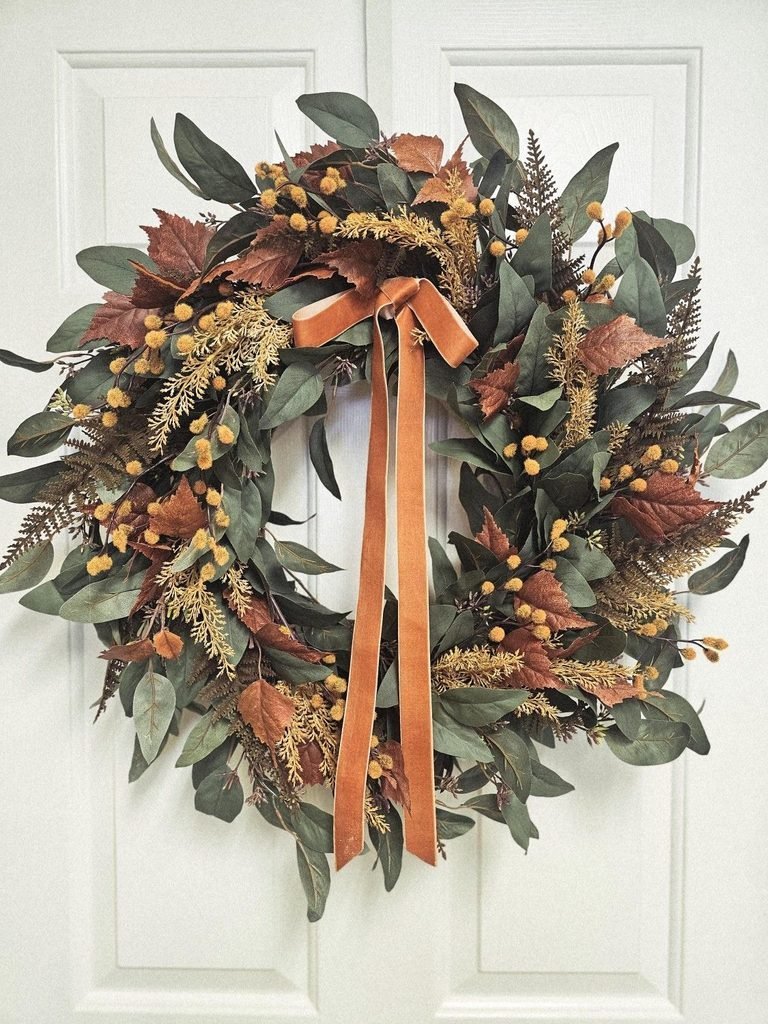
Traditional Warm Fall Colors
For a classic autumn look, combine:
- Burnt orange
- Rust
- Mustard yellow
- Burgundy
- Warm brown
- Deep red
These colors work especially well against white, black, brown, or natural wood doors.
If your home already has traditional farmhouse decor, this palette feels almost effortless.
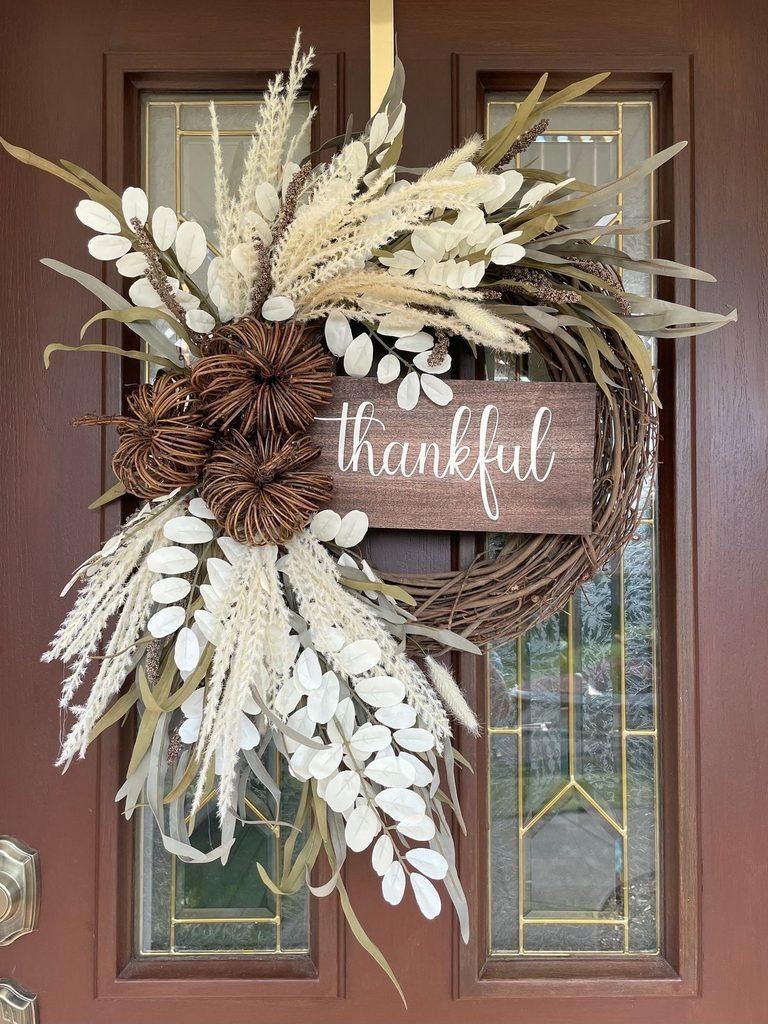
Neutral Fall Wreath Colors
For something softer, try:
- Cream
- Beige
- Taupe
- Soft brown
- Muted sage
- Warm white
- Natural tan
I especially like this approach when the rest of the porch already has plenty of visual detail. A neutral wreath gives you the cozy fall feeling without turning the front door into a pumpkin festival.
Moody Autumn Colors
Want something a little more sophisticated?
Try deep burgundy, olive green, charcoal, muted plum, and dark brown.
These colors look gorgeous against lighter doors and work particularly well with modern farmhouse, cottage, and traditional homes.
The trick involves keeping the palette controlled. Choose two or three dominant colors rather than throwing every autumn shade onto one wreath.
Should You Buy or Make a Fall Wreath?
This question usually comes down to one thing: how much time do you actually want to spend making the wreath?
If you enjoy crafting, DIY wreaths can give you much more control over the colors, size, materials, and overall style. You can also repurpose things you already own.
If you want something quick, buying a finished wreath makes perfect sense.
And no, your home decor credentials won’t disappear because you bought one.
When DIY Makes More Sense
I recommend making your own wreath when you want something specific.
For example, perhaps you want a neutral farmhouse wreath with dried wheat and cream florals. Finding exactly that combination can take longer than simply making it yourself.
DIY also gives you the option to reuse the base every year.
Country Living has highlighted everything from grapevine and bittersweet wreaths to wheat wreaths, braided rope wreaths, dried hydrangea arrangements, and repurposed vintage pieces.
“A little crafting goes a long way to creating the best fall wreath.”
Country Living, 62 DIY Fall Wreath Ideas
That pretty much sums up my approach too. You don’t need professional floristry skills. You need a decent base, a few complementary materials, and the willingness to move things around until they look right.
How Do You Choose the Right Fall Wreath for Your Door?
Before you start shopping for wreath ideas for fall, look at your door.
Seriously.
The door color, architectural style, porch size, and surrounding decor should influence your choice.
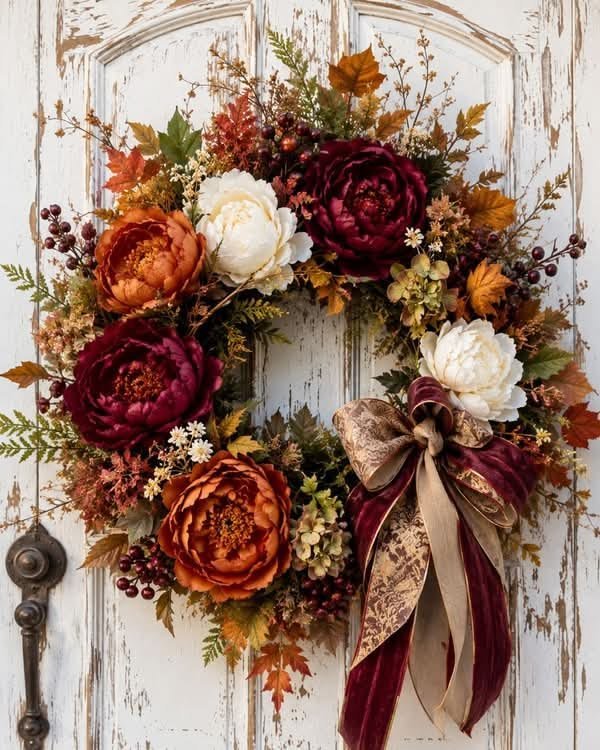
For a White Door
Almost anything works, but warm colors stand out beautifully.
Try rust, orange, burgundy, greenery, wheat, or deep brown.
A natural grapevine wreath with dried leaves can look especially good because the darker textures create contrast against the white background.
For a Black Door
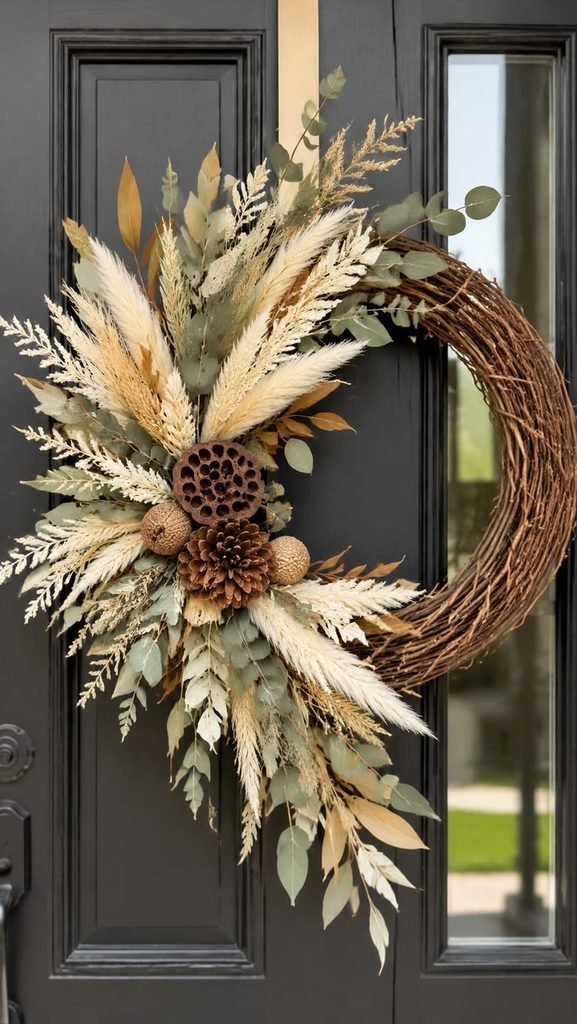
This is where lighter wreaths really shine.
Cream flowers, dried wheat, pale greenery, beige ribbon, and muted pumpkins can create a sophisticated contrast.
I’d avoid making the entire wreath extremely dark unless you specifically want a dramatic look. Otherwise, the wreath can disappear from a few feet away.
For a Wood Door
Natural materials work wonderfully here.
Think grapevine, eucalyptus, dried leaves, wheat, pinecones, acorns, and muted berries.
You can also add a small amount of color through ribbon or miniature pumpkins without competing with the warmth of the wood.
For a Colored Door
Here’s where you should think about contrast rather than matching.
A blue or green door can look incredible with cream, tan, rust, copper, or warm orange accents. A red door can benefit from more muted foliage and neutral elements.
Your wreath doesn’t need to match the door. It needs to stand out against it.
How Big Should a Fall Wreath Be?
Size can completely change the look of your entryway.
A tiny wreath on a large door can look lost, while an oversized wreath can overwhelm a narrow entrance.
For most standard doors, an 18 to 24 inch wreath gives you a substantial presence without making the doorway feel crowded.
Country Living uses an 18-inch grapevine wreath form for several of its fall projects, while its bittersweet wreath tutorial recommends an 18 to 24 inch base.
I like starting with an 18-inch base and adding enough foliage to increase the visual size. That approach gives you flexibility and prevents the wreath from becoming ridiculously heavy.
Because yes, there is such a thing as too much decor.
The Best Materials for Wreath Ideas for Fall
Once you know the style and size you want, choosing materials becomes much easier.
Dried Flowers
Dried flowers create a softer and more elegant autumn look.
Dried hydrangeas, strawflowers, wheat, pampas grass, and other dried stems can add volume without making the wreath look overly colorful.
Martha Stewart recently highlighted dried flowers as a particularly useful fall decorating material because they offer long-lasting color, low maintenance, and the ability to reuse them in future seasonal projects.
Grapevine
If I had to recommend one wreath base for beginners, I’d choose grapevine.
The natural shape already looks decorative, so you don’t have to cover every inch. You can tuck foliage and branches into the vines and secure them with floral wire.
That makes it incredibly forgiving.
Wheat and Dried Grasses
Wheat gives a wreath that unmistakable harvest feeling without relying on pumpkins or orange leaves.
Country Living specifically features wheat wreaths as a simple fall DIY, using overlapping dried wheat pieces to build texture around a craft ring.
This style works particularly well if you prefer neutral farmhouse or rustic fall decor.
Pumpkins and Gourds
Of course, we have to talk about pumpkins.
Mini pumpkins and gourds can instantly make a wreath feel more seasonal. You can use faux versions if you want the wreath to last for several years.
The key involves restraint.
A few small pumpkins tucked among foliage often look more polished than covering the entire wreath with them.
Wreath Ideas for Fall That Work From September Through Thanksgiving
One mistake I see with seasonal decorating involves making a wreath too specific to one holiday.
A Halloween wreath might look fantastic in October, but you’ll probably replace it within a few weeks.
If you want better value from your decor, choose a wreath that works throughout the season.
Choose Harvest Instead of Halloween
Use:
- Dried leaves
- Wheat
- Berries
- Pinecones
- Mini pumpkins
- Neutral ribbon
- Dried flowers
These elements can carry your wreath from early fall through Thanksgiving without looking out of place.
Country Living also recommends longer-lasting designs such as plaid and felt wreaths for displays that can work from the beginning of fall through Thanksgiving.
That makes much more sense if you don’t enjoy changing your front door every three weeks.
Wreath Ideas for Fall: Beautiful Styles to Try
Now that we’ve covered the basics, let’s get to the fun part. The right wreath ideas for fall can completely change the personality of your front door, and you don’t need an elaborate porch to make one work.
I’ve always preferred wreaths that look collected rather than overly coordinated. A little asymmetry, some natural texture, and one unexpected detail can make a wreath feel much more interesting.
So, which style fits your home?
Rustic Wreath Ideas for Fall
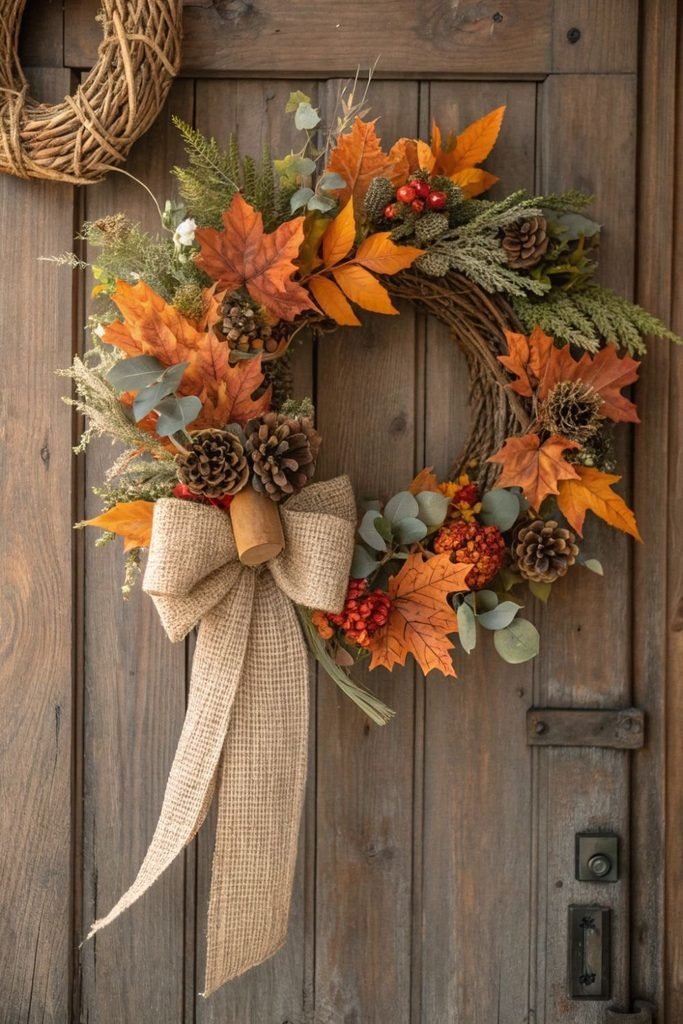
A rustic fall wreath works beautifully if you love farmhouse, cottage, or country-inspired decorating.
Start with a grapevine base and add dried leaves, wheat, pinecones, berries, and a few small pumpkins. Let some of the grapevine remain visible instead of covering the entire thing.
That exposed wood gives the wreath a relaxed, handmade character.
Add a Plaid Ribbon
A simple plaid ribbon can push the rustic look even further. Choose warm brown, cream, rust, or burgundy rather than a bright seasonal orange.
I like loosely tying the ribbon at the bottom or slightly off-center. Perfectly symmetrical bows can sometimes make a wreath look a little too manufactured.
Why not let it look like someone actually made it?
Neutral Wreath Ideas for Fall
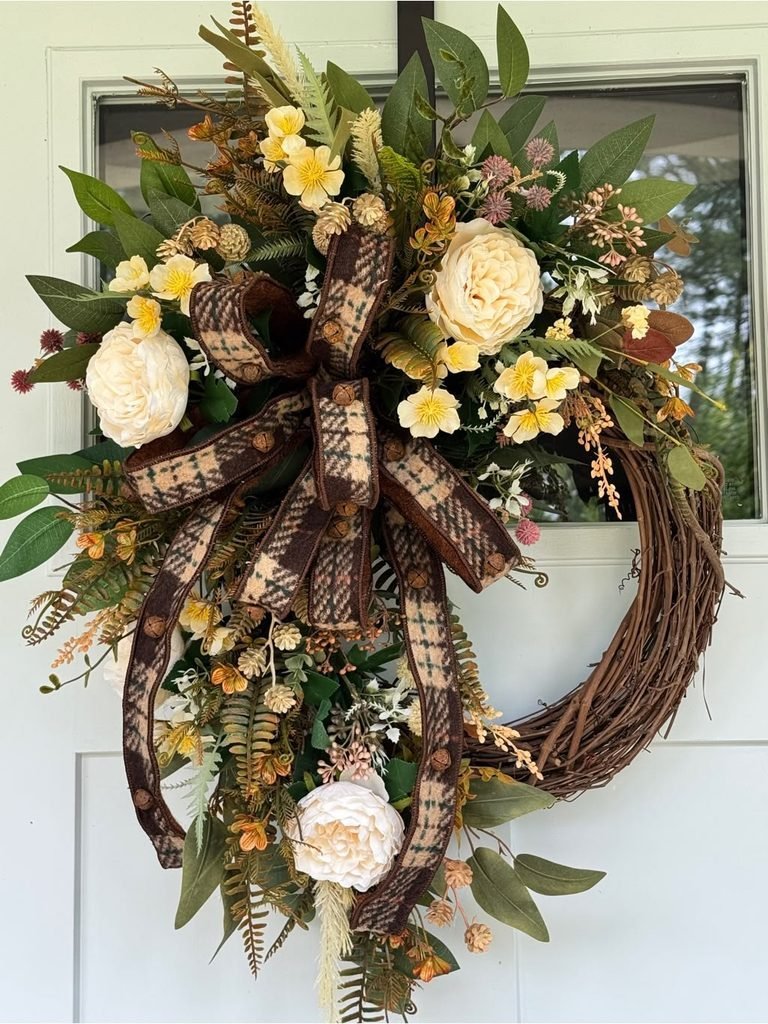
Neutral fall decorating has become one of my favorite approaches because it feels seasonal without overwhelming the rest of the house.
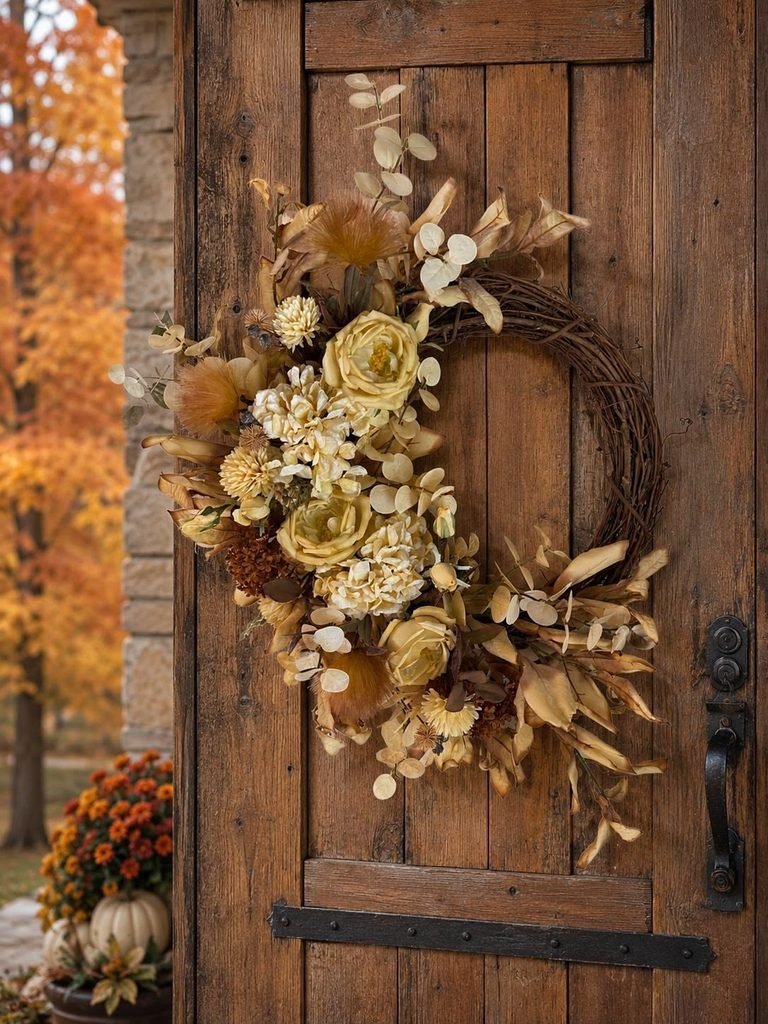
For a neutral wreath, combine cream flowers, beige grasses, natural wheat, muted greenery, and brown branches.
You can also add a few white pumpkins for a subtle seasonal detail.
This style works particularly well with white, beige, gray, black, and natural wood exteriors.
Keep the Palette Simple
Try limiting yourself to three main shades:
- Warm white
- Beige or tan
- Natural brown
You can add a tiny amount of muted green for contrast.
The result feels cozy rather than overly themed. If you already decorate your home with neutral colors, this approach lets your fall wreath fit naturally into the existing space.
Pumpkin Wreath Ideas for Fall
Pumpkins might feel predictable, but there’s a reason they keep showing up in autumn decorating.
They instantly communicate fall.
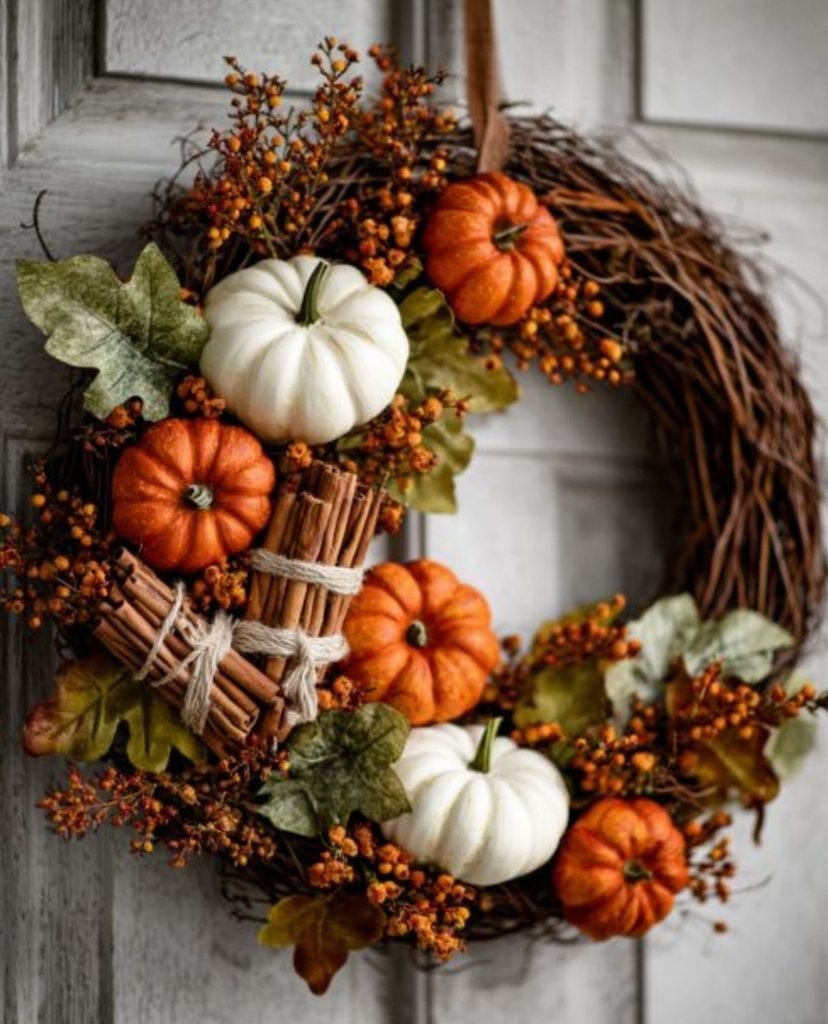
Instead of using large pumpkins, try mini faux pumpkins around a grapevine or greenery base. Mix white, cream, tan, and muted orange pumpkins for a softer look.
I especially like pumpkin wreaths that leave plenty of greenery visible.
Try a Pumpkin and Eucalyptus Combination
Eucalyptus gives pumpkin wreaths a fresher appearance.
Combine muted eucalyptus leaves with miniature pumpkins, dried flowers, and a simple linen bow. The greenery breaks up the warm tones and prevents the wreath from looking too heavy.
And if you use faux pumpkins, you can pack the wreath away and bring it back next year. Your storage closet might complain, but your wallet probably won’t.
Dried Flower Wreath Ideas for Fall
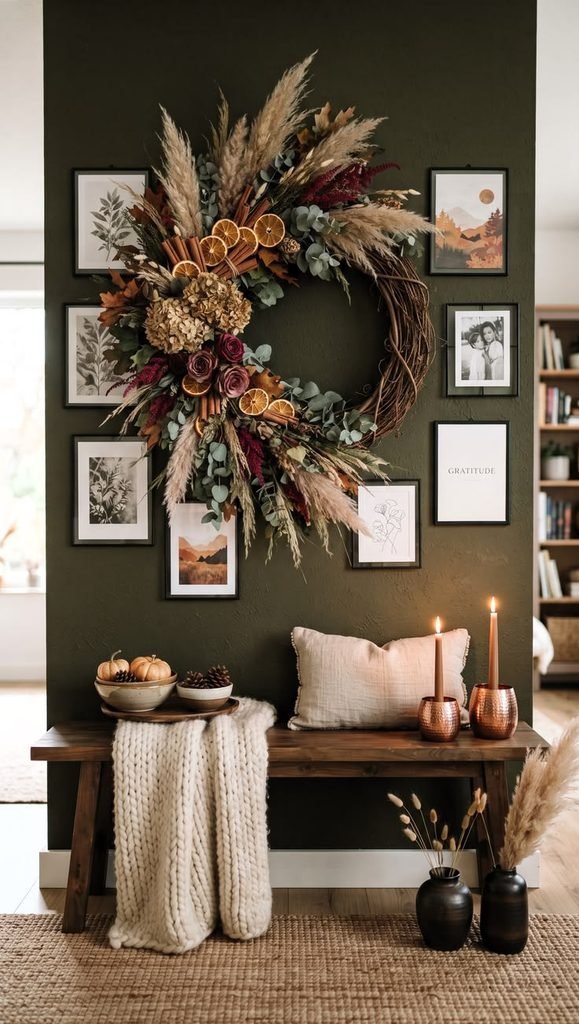
Dried flowers offer one of the easiest ways to create an elegant autumn wreath.
You can use dried hydrangeas, strawflowers, wheat, grasses, seed pods, and preserved foliage.
The beauty comes from the variation in texture.
Some pieces look delicate, others look slightly wild, and that contrast creates visual interest without requiring dozens of different colors.
Use Dried Hydrangeas
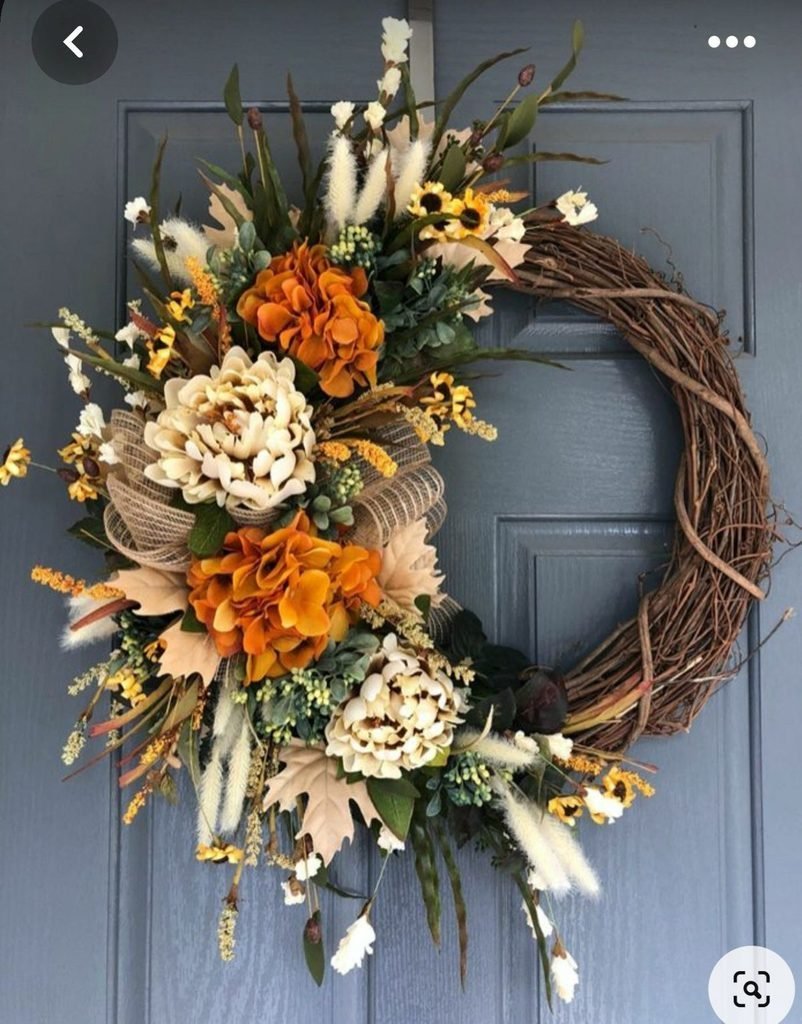
Dried hydrangeas work especially well for romantic cottage-style wreaths.
Their large flower heads create volume, while smaller stems fill the gaps around the wreath.
If you want something softer than the traditional orange-and-red fall palette, choose cream, dusty green, tan, and muted blush tones.
That combination can look surprisingly beautiful in autumn.
Wheat Wreath Ideas for Fall
Wheat might be one of the simplest materials you can use, but it creates a surprisingly polished result.
A wheat wreath works especially well with farmhouse, rustic, cottage, and traditional homes.
Arrange the wheat in the same direction around the base for a clean appearance, or create an asymmetrical design by concentrating the stems on one side.
I prefer the second approach.
The asymmetry gives the wreath movement and makes the arrangement feel more organic.
“Wheat wreaths bring an easy, natural touch to fall decorating.”
Country Living, 62 DIY Fall Wreath Ideas (countryliving.com)
You can finish the arrangement with a linen ribbon or leave it completely natural.
Sometimes simple really does win.
Fall Leaf Wreath Ideas
If you want the classic autumn look, you can’t go wrong with leaves.
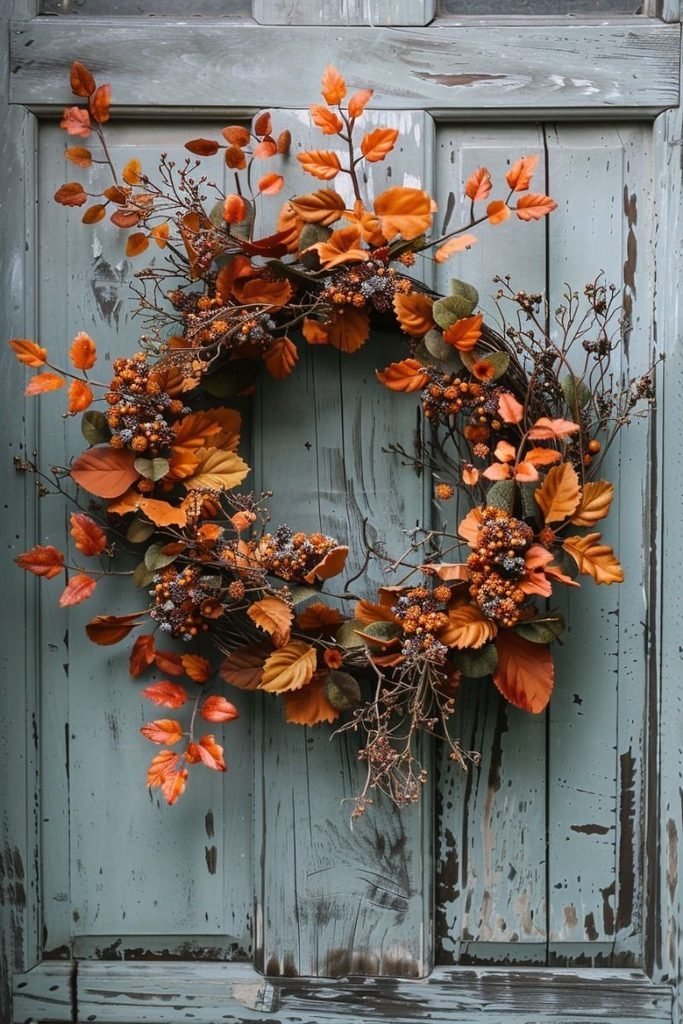
Use faux maple leaves in rust, golden yellow, burgundy, and brown to create a traditional fall wreath.
The important part involves creating variation.
Avoid arranging every leaf at the same angle. Bend and layer individual stems so the wreath gains depth.
Make the Leaves Look More Natural
Start by attaching larger leaves first.
Then add smaller leaves around them.
Finally, fill obvious gaps with berries, small branches, or dried grasses.
That three-layer approach creates a fuller appearance without requiring an enormous amount of material.
You can also leave a small section of the grapevine base exposed. I think that little bit of imperfection often makes the wreath look more expensive.
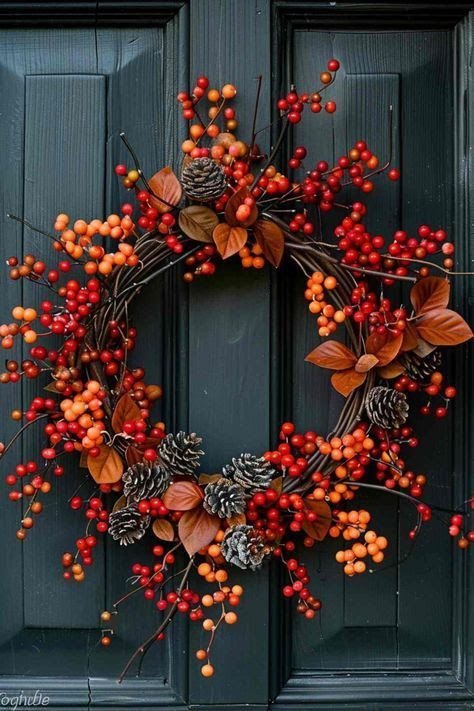
Fall Berry Wreath Ideas
Want something colorful without using pumpkins?
Try berries.
Clusters of faux cranberries, rose hips, bittersweet berries, or darker berry stems can add just enough color to a neutral wreath.
Berries also create small visual accents that draw your eye around the entire arrangement.
I particularly like burgundy berries with cream flowers and eucalyptus because the combination feels autumnal without becoming overwhelmingly orange.
Minimalist Wreath Ideas for Fall
Not everyone wants their front door to look like an autumn craft explosion.
If you prefer minimalist decor, keep your wreath simple.
Choose a thin grapevine base and add a small arrangement of:
- Dried eucalyptus
- Wheat
- A few berries
- One simple ribbon
You can also create a half wreath, where the greenery covers only one side of the circular base.
This style works beautifully with modern homes because it adds seasonal character without fighting the architecture.
Cottage-Style Wreath Ideas for Fall
Cottage decorating gives you plenty of freedom.
You can combine dried flowers, greenery, berries, wheat, branches, and ribbon without worrying about creating a perfectly symmetrical arrangement.
In fact, the slightly wild look usually works better.
Try using soft cream flowers, muted sage foliage, dried grasses, brown branches, and a faded floral ribbon.
The result feels collected from a countryside garden rather than assembled from a single seasonal decor collection.
And that’s exactly the charm.
How to Make Your Fall Wreath Last Longer
You probably don’t want to make or buy a beautiful wreath only to watch it fade after a few weeks.
Fortunately, a few simple choices can help.
Choose Durable Materials
If your wreath will hang outdoors, prioritize materials that can handle changing weather.
Faux foliage usually gives you the easiest long-term option.
For dried materials, protect them from heavy rain and excessive moisture whenever possible.
Protect the Wreath From Direct Sun
Strong sunlight can fade artificial leaves, ribbons, and flowers.
If your front door receives intense afternoon sun, consider hanging the wreath under a covered porch or choosing materials designed for outdoor use.
Store It Properly
When fall ends, don’t throw the wreath into a random storage box with Christmas lights, extension cords, and approximately seventeen things you haven’t seen since 2019.
Give it its own box.
Store the wreath in a cool, dry place, and avoid crushing the foliage.
That small bit of effort can help you reuse the same wreath for several seasons.
How to Hang a Fall Wreath Without Damaging Your Door
You have plenty of options depending on your door.
An over-the-door hanger offers the simplest solution, while adhesive hooks can work well when you choose a product designed for the door surface.
For heavier wreaths, use a stronger hanging method that matches the material of your door.
Before hanging anything, check the wreath’s weight.
A large grapevine wreath loaded with pumpkins and dried flowers can weigh considerably more than it looks.
I’ve learned that lesson the annoying way.
How to Make Your Fall Wreath Look More Expensive
You don’t necessarily need expensive materials.
You need good composition.
Start with a quality base. Then add larger pieces first, followed by medium details and small accents.
Keep the color palette controlled and vary the textures.
Most importantly, don’t cover every inch of the wreath.
Leaving negative space allows individual elements to stand out.
My Simple Formula
When I create a seasonal arrangement, I like to think in three layers:
Base: grapevine, greenery, or branches.
Main feature: dried flowers, leaves, wheat, or pumpkins.
Accent: berries, pinecones, ribbon, or small decorative details.
That formula gives you enough structure to create something cohesive while still leaving room for creativity.
Final Thoughts on Wreath Ideas for Fall
The best wreath ideas for fall don’t necessarily involve the most decorations. They involve choosing materials, colors, and textures that complement your home.
A rustic grapevine wreath can create a warm farmhouse entrance. A neutral dried-flower wreath can give your home a softer look. A pumpkin wreath can bring traditional autumn charm, while a minimalist wheat arrangement can keep things beautifully understated.
If I had to choose one approach, I’d start with a natural grapevine base, dried foliage, a few seasonal accents, and a simple ribbon. You can change the colors and details each year without completely rebuilding the wreath.
And remember, your front door doesn’t need to look like a department-store display.
It just needs to make you smile when you walk up to it.
Because really, isn’t that what good home decor should do?
Filed under